
Kitchen wisdom
Soaking, sprouting and fermenting were never ceremony. They made food softer, sweeter and easier to eat — and every one of them happens while you sleep.
- 8 hrs soaking
- 36 hrs sprouting
- 12 hrs fermenting
There is a particular sound that belonged to old Tamil kitchens. The soft knock of a vessel being set down at night, half-filled with water and grain, covered with a plate. Nobody explained it. Nobody called it a health practice. It simply happened, every evening, the way lamps were lit and doors were closed.
If you had asked why, you would probably have been told athu appadithan — that is just how it is done.
But anyone who has eaten both versions knows the difference immediately. The soaked dal that turns creamy instead of stubborn. The sprouted mix that a small child finishes without complaint. The fermented koozh that sits easy in the stomach on the hottest afternoon of the year. Our grandmothers were not being ceremonial. They were getting a better result, every single time, and they knew it.
The seed is not trying to feed you
A grain of pearl millet, a black gram, a fenugreek seed — none of these exist for our benefit. Each one is a plant’s attempt at a future. It is packed tightly, sealed against moisture, and built to survive being eaten, buried, rained on and forgotten, and still come up as a seedling months later.
That armour is real, and you meet it every time a pulse refuses to soften. Seeds hold their goodness locked up and their starches tightly bound, so that nothing sprouts before the season is right. Excellent for the plant. Less convenient for the person waiting at the dining mat.
So our kitchens learned to do something rather clever. Instead of fighting the seed, they persuaded it. Water is the signal. When a grain sits overnight in water, it stops behaving like a stored seed and starts behaving like a seed that has arrived at monsoon. It softens. It stirs. It begins, quietly, to unpack everything it had been holding shut.
Our grandmothers were not just soaking food. They were waking it up — and letting it open itself before it ever reached the fire.
Soaking
The simplest of the three, and the one still most alive in our homes. Rice before cooking. Chana overnight. Millets given their hours. Almonds soaked and peeled in the morning. Fenugreek seeds left in a steel tumbler by the window.
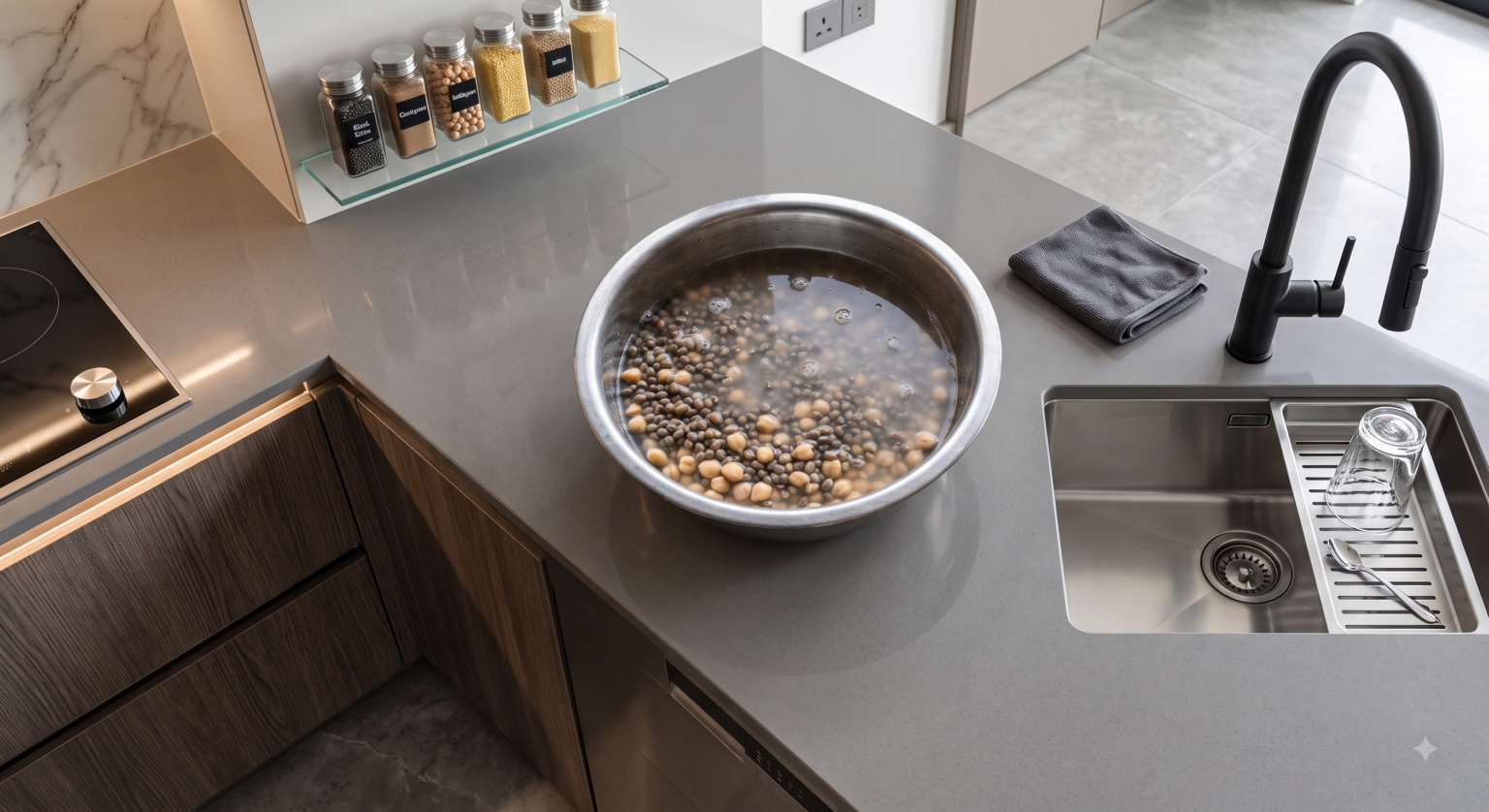
- It cooks faster, on less fuel. Soaked chana and unsoaked chana in the same kitchen is not a close contest — one is done while the other is still arguing with you.
- The texture is better. Softer, creamier, more even. Dal that turns to velvet instead of grit.
- It sits lighter. Every household in Tamil Nadu learned this by observation long before anyone could explain it, and it is the reason the habit survived at all.
One detail worth keeping. The soaking water was always thrown away, never cooked with. Nobody could have told you the chemistry. They simply knew that the water that came off the grain was not the water you wanted in your pot — and on that, they were right.
Sprouting
Give the same seed a little longer — drain it, tie it in a wet cloth, leave it somewhere warm — and it goes further. A white tip appears. The seed has committed.
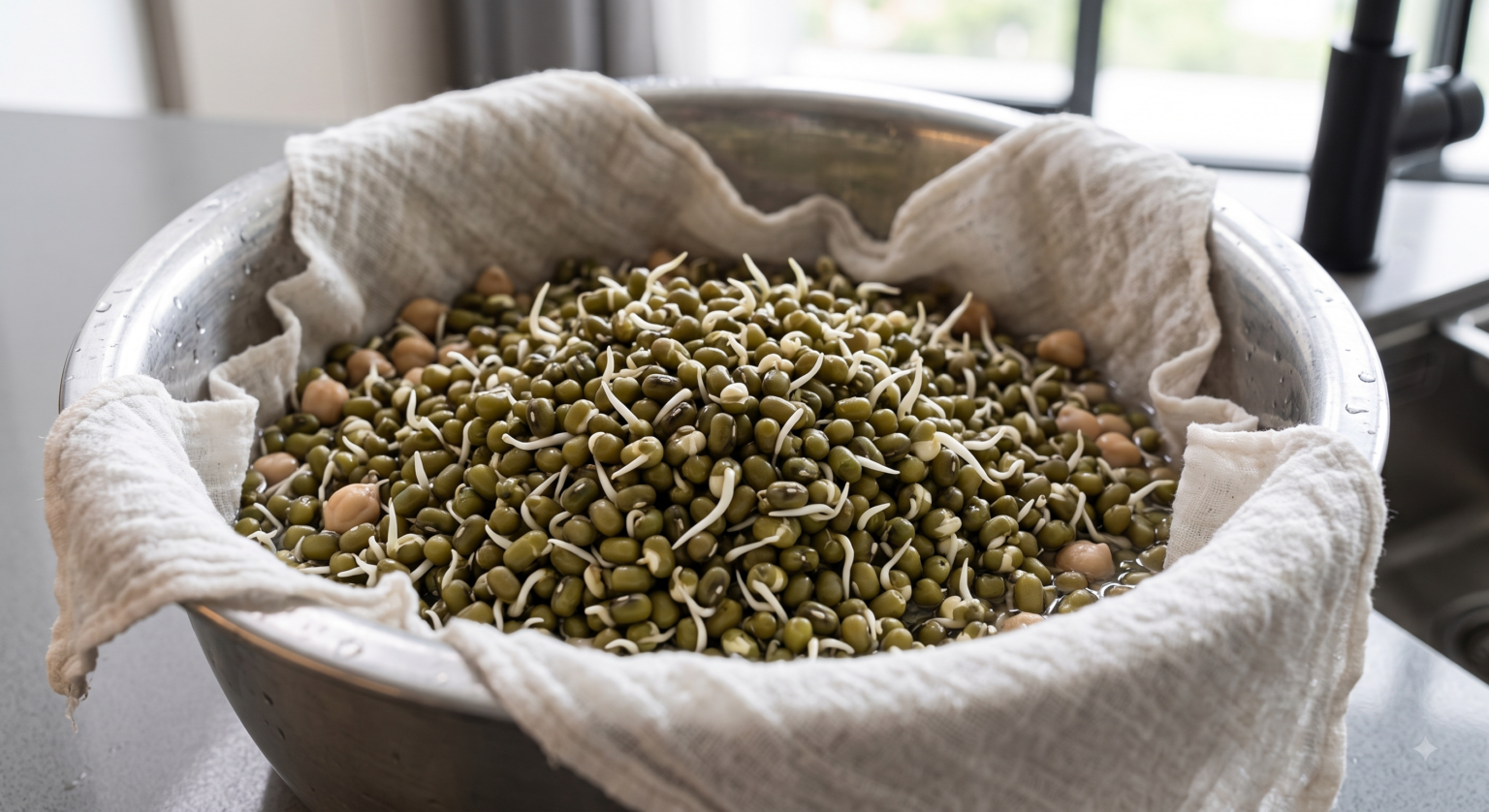
A sprouting seed has begun spending its own stores, breaking dense things down into simpler ones a seedling can use. The result on the plate is unmistakable: the texture turns soft, the taste turns faintly sweet, and the heaviness goes.
That sweetness is the reason sattu maavu worked on children who refused everything else. And it is why sprouted mixes were made for exactly the people who needed food to do the most work — small children, growing teenagers, feeding mothers, the elderly, anyone getting back on their feet after an illness. Not because the grains were different. Because they had been prepared differently.
This is precisely how FounditGood’s Sprouted Healthy Mix and the children’s Premium Healthy Mix are made — grains and pulses sprouted first, then gently roasted and ground.
Fermenting
The boldest of the three, and the one modern kitchens have most nearly lost. Here, our grandmothers did not do the work themselves. They handed it over — to the invisible population of friendly microbes living on the grain, on the pot, in the warm air of a Tamil afternoon.

Idli batter left to rise overnight. Dosa maavu. Ulundhu kanji. Kambu koozh, fermented and carried to the fields. Pazhaya sadam — last night’s rice, covered in water, eaten at dawn with a green chilli and a little salt, which nobody thought of as a health food and which every working body in the village relied on.
- It comes out gentler. Pleasantly sour, softer, easier to eat than the same grain cooked plain.
- It keeps in the heat. Hours on a Tamil afternoon without turning — which is exactly why it survived here.
- It carries you further. A long morning of work without sitting heavy. That combination is not easy to get any other way.
And here is the detail that always strikes me. Fermentation is the only kitchen craft that works better in Tamil Nadu’s climate. Every other preservation method fights the heat. This one uses it. A batter that would sulk for two days in a Delhi December is ready by morning in Pollachi. We did not lack refrigeration. We had something that suited the place better.
FounditGood’s Fermented Kambu Koozh Powder and Fermented Ulundhu Kanji Powder are traditionally fermented preparations, made ready to mix — the same craft, without the overnight vessel.
Save this
How long to soak what
General kitchen guidance, not a rule. Warm weather shortens every number here; a cool Nilgiris morning stretches them. Change the water once if you are soaking longer than eight hours.
| What | Soak | Notes |
|---|---|---|
| Raw rice | 20–30 min | Enough to soften. Longer makes it mushy. |
| Millets — kambu, thinai, samai | 6–8 hrs | Overnight is ideal. Rinse until the water runs clear. |
| Chana, rajma, dried peas | 8–10 hrs | The big ones. Always discard the water. |
| Toor, moong, masoor dal | 30 min–2 hrs | Split dals need very little. |
| Ulundhu for batter | 4–6 hrs | Grind while still cool for a better rise. |
| Almonds | 6–8 hrs | The skin slips off easily afterwards. |
| Fenugreek seeds | 6–8 hrs | They swell considerably. Use a roomy vessel. |
| Green gram for sprouting | 8 hrs, then 12–24 hrs in cloth | Warmth matters more than time. |
Begin here
Three ways to start this week
None of this needs a project. Start with one.
-
Tonight
Soak
A cup of any dal, chana or millet, covered with water, a plate on top. Drain in the morning, rinse, cook as usual. You will notice the difference in the pot before you notice it on the plate.
-
This weekend
Sprout
Soak green gram overnight. Drain it, tie it in a damp cotton cloth, leave it in a warm corner. By the next evening you will have sprouts. Eat them as sundal, or stir them into anything.
-
Any morning
Ferment
You almost certainly already do. The next time there is leftover rice, cover it with water, leave it out overnight, and have it at dawn with a little salt and a green chilli, the way it was always eaten.
What we lost, and what is easy to take back
It would be easy to be sentimental about this, so let me put it plainly instead.
Our grandmothers arrived at soaking, sprouting and fermenting because they worked. The food came out better — softer, sweeter, easier to eat, longer-lasting in the heat, kinder to the youngest and the oldest people at the table. That was not a happy accident alongside the practicality. That was the practicality. Good food and sensible food turned out to be the same thing, which is usually how the best traditions are made.
What slipped away was never the knowledge. It was the waiting. The vessel needs a night. The cloth needs a day. The batter needs a warm corner and the discipline to leave it alone. But a night is not much to ask, and it is the one ingredient that costs nothing.
Tonight, if nothing else: soak something.
From our kitchen
When the overnight vessel isn’t an option
The same three crafts, prepared the traditional way and made ready to use.
Sprouted Healthy Mix
34 ingredients sprouted first, then gently roasted and ground. Sattu maavu, the patient way.
Shop nowKambu Koozh Powder
The traditional fermented pearl millet drink, instant and ready to mix with water or curd.
Shop nowMulti Millet Pongal Mix
Four millets, moong dal, cashews and spices. A heritage meal on a weeknight timeline.
Shop nowCommon questions
Before you set the vessel down
Do I really have to throw away the soaking water?
Yes, and it costs you nothing to do it. Drain it, give the grain a quick rinse, and cook in fresh water. This was universal practice in old kitchens and there is no good reason to break with it.
Is it safe to leave rice out overnight?
Pazhaya sadam has been eaten at dawn in Tamil homes for generations, and the acidity that develops is part of what protects it. That said, use clean water and a clean covered vessel, keep it to a single night rather than two, and eat it in the morning rather than saving it through the day. If it smells sharp or unpleasant rather than pleasantly sour, discard it. Anyone who is pregnant, elderly, or has a weakened immune system should be more cautious, and should ask their doctor first.
My sprouts aren’t sprouting. What went wrong?
Almost always one of three things: the cloth dried out, the corner was too cold, or the seeds were old. Rinse twice a day, keep the cloth damp but not dripping, and buy whole pulses that look plump rather than shrivelled. Warmth matters more than time — the same batch that takes a day in May can take two in December.
What if I forget to soak overnight?
Soak in hot water for an hour or two instead. It is not the same, but it is far better than nothing, and it will still save you fuel and give you a softer result.
Can I soak everything together in one vessel?
Better not to. As the chart above shows, split dals need under two hours while chana wants ten, so a shared vessel leaves one ingredient hard and turns the other to paste. Group things with similar times, or keep them separate.
This article is shared for general information and cultural interest only. It is not medical or nutritional advice, and is not intended to diagnose, treat, cure or prevent any disease. Traditional food practices vary between households and regions. If you are pregnant, managing a health condition, or taking prescribed medication, please consult a qualified physician or registered dietitian before making changes to your diet. Read our full Medical Disclaimer.